DMV Frontpage Original · Sports
The Commanders Had a Plan. Who Was Supposed to Stop It From Going Wrong?
Washington's overtime failure against the Giants raises questions about how its game-management staff responds when a plan needs to change. Accepting responsibility doesn't explain why the offense never adjusted as time ran down.
Washington had time to attempt a winning field goal against the Giants on Sunday and finished overtime without attempting one. Jayden Daniels' decision to keep the ball on the final play deserves criticism, but the Commanders also need to explain why they continued trying to gain yards as the time to do it safely disappeared. Someone had to be responsible for recognizing that the plan needed to change and getting that decision onto the field.
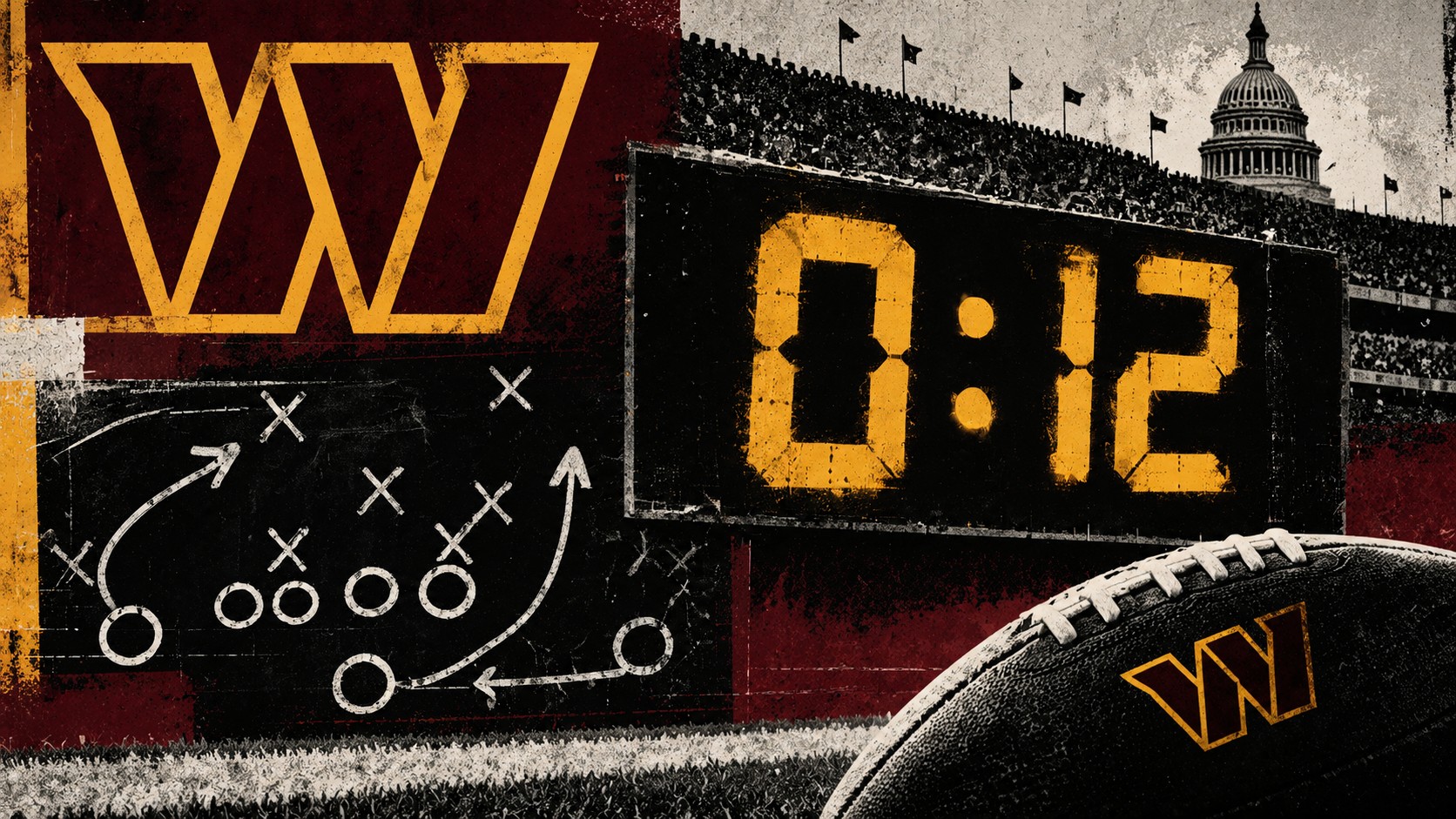
The sequence matters because Washington had an opportunity to handle this without rushing. Treylon Burks went out of bounds at the Giants' 26-yard line with 55 seconds remaining, according to the Associated Press. The official gamebook lists Rachaad White's next snap at 55 seconds, and his two-yard run ended with 50 seconds left, according to ESPN. Washington was still in the huddle with 27 seconds remaining. Daniels took the final snap with 12 seconds left and no timeouts, then was sacked for no gain with eight seconds remaining. The Commanders couldn't spike it before time expired, leaving them with a 27-27 tie.
Trying to improve the field position wasn't necessarily an unreasonable decision when Washington reached the 26. A shorter kick would have helped, and taking some time off could limit what the Giants could do if Washington missed. But that approach depended on leaving enough time to stop the clock and attempt the kick. As substitutions and the huddle took longer, Washington needed to reconsider how much another play was worth. A plan that allowed time for an additional gain earlier in the possession had become dependent on avoiding an inbounds tackle.
Dan Quinn acknowledged afterward that he could have prevented that situation. “We don't need to gain more yards, so that's on me,” he said Sunday. That is a fair assessment of his own decision, but Washington still needs to account for what happened between choosing to continue the possession and snapping the ball with so little time left. The decision was becoming harder to execute while the offense was getting ready to run it.
Quinn offered more detail Monday, explaining that he communicates the situation to offensive coordinator David Blough, who has the final communication with Daniels on each down. He defended the play as something Washington could have run quickly enough to follow with a spike, while acknowledging that substitutions took too long and weren't necessary. That identifies a route for getting instructions to the quarterback, but it leaves open how a change in strategy was supposed to move through it once the delay became a problem. By then, gaining another yard or two had to be weighed against losing the opportunity to kick altogether.
Blough's responsibility for the play call matters here, just as Daniels' responsibility to stop the clock matters. Daniels still had to understand what an inbounds tackle would mean, and a throwaway could have preserved the field-goal attempt. But identifying what the quarterback should have done doesn't explain why Washington allowed the play to reach him under those conditions. Quinn was responsible for the overall decision, Blough for the call and its communication and Daniels for carrying it out with an understanding of the clock. Their responsibilities were connected, and Washington needs to determine where the correction failed to happen.
There was already a structure for preparing for these situations during Quinn's tenure. In January 2025, he described regular meetings with Dave Gardi and said Gardi presented situations to the team every Friday. Gardi's work included in-game management before he left for Tennessee in May. Quinn confirmed Monday that Kevin Brown took on replay and officiating work while Connor Nickol assists on the coaching, game-management and analytics side. Washington lists Nickol as its game management coordinator/coaching analyst. Those assignments don't establish his authority to change this particular call, and Gardi's departure alone doesn't explain the failure.
There is evidence that the timeout situation was discussed. Chris Paul told 7News DC's Scott Abraham that the lack of timeouts was talked about in the huddle, according to reporting reproducing the exchange. That doesn't establish what Daniels understood when he took the snap, but it does make it harder to assume the entire offense simply didn't know. Quinn also said the team doesn't record its headset conversations, so a review of those exchanges depends on the participants' accounts. The public explanations still don't establish whether someone tried to get the play changed as time ran down.
Accepting responsibility is the beginning of accountability, and Quinn and Daniels have both done that publicly. Washington now has to identify where a warning was missed, a message failed to get through or a decision wasn't changed in time. The next time a possession develops differently than expected, the Commanders need someone with a clear responsibility to recognize it and a way to get the offense to respond before the opportunity is gone.