DMV Frontpage Original · Sports
Adam Peters' Draft Problems Are Compounding Each Other
Washington is getting too little from too many of its draft picks while trading away opportunities to find replacements, a combination that threatens the foundation Adam Peters is trying to build.
When Adam Peters took over as general manager of the Washington Commanders in 2024, he inherited a team coming off a 4-13 season with holes throughout the roster. Washington held nine selections in that year's draft, including the second overall pick, giving Peters an opportunity to begin rebuilding the team with younger players.
Peters used that second pick on Jayden Daniels, who helped lead Washington to 12 wins and an appearance in the NFC Championship Game. It was a remarkable turnaround for a franchise that had struggled for years, but the success of that first season might have masked some problems with the roster Peters was putting together.
Two years later, several of his early draft picks have struggled to develop, while trades for established veterans have reduced the number of selections available to find additional talent. Washington now finds itself in a position where disappointing draft results and the lack of draft capital appear to be making each other worse.
The Draft Results
Outside of Daniels, Washington's 2024 draft class has been disappointing. Defensive tackle Jer'Zhan Newton, selected 36th overall, hasn't established himself as the disruptive interior defender the Commanders hoped he'd become. Tight end Ben Sinnott and wide receiver Luke McCaffrey have struggled to find significant roles in the offense, while offensive lineman Brandon Coleman has had an uneven start to his career.
Cornerback Mike Sainristil initially appeared to be another good selection after playing an important role during Washington's playoff run. But his performance has declined considerably, and through the first three games of 2026, Pro Football Focus ranked him last among 99 qualifying cornerbacks with a 28.2 coverage grade. Opposing quarterbacks had a perfect 158.3 passer rating when targeting him this season.
There are some legitimate questions about how Sainristil has been used, particularly when he's asked to play outside rather than in the slot. But regardless of whether the problems are related to his performance, the defensive scheme or some combination of the two, Washington hasn't gotten the level of play it needs from him this season. And with several other selections from that class struggling, the early returns aren't especially encouraging.
The Commanders made five picks in 2025 and six more in 2026. There have been some promising additions, including offensive tackle Josh Conerly Jr., running back Jacory Croskey-Merritt and linebacker Sonny Styles. But Washington also waived sixth-round running back Kaytron Allen after just four games this season, and Miami claimed him before the Commanders could bring him back to the practice squad.
Allen might never become a productive NFL running back, and it's certainly too early to judge the entire 2026 class. However, Washington has made just 11 selections over the past two drafts, and that's a relatively small number of opportunities for a team that still needs significant help at several positions.
The Cost of Trading Picks
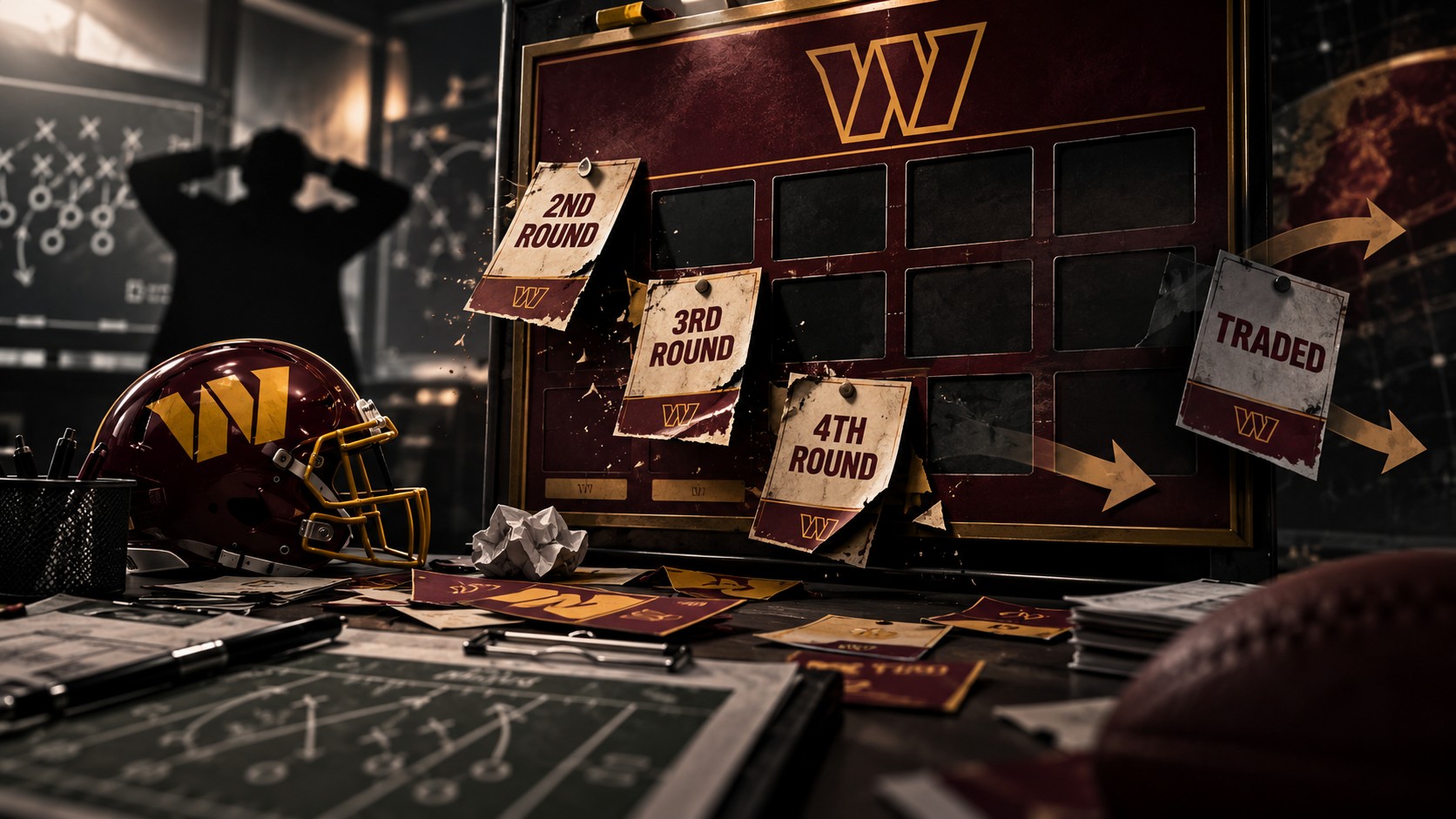
Peters has been aggressive in acquiring established players, most notably Marshon Lattimore, Deebo Samuel and Laremy Tunsil. The Commanders traded third-, fourth- and sixth-round selections in 2025 to New Orleans for Lattimore and a fifth-round pick, which they later sent to San Francisco for Samuel.
The Tunsil trade was considerably more expensive. Washington sent Houston third- and seventh-round selections in 2025, along with second- and fourth-round picks in 2026, receiving Tunsil and a 2025 fourth-round selection in return.
There were good reasons for making some of these moves. Lattimore was acquired during Washington's unexpected playoff push in 2024, and Samuel and Tunsil were added after the Commanders had reached the NFC Championship Game. Peters was trying to improve a team that suddenly appeared capable of competing with the best teams in the NFC.
Tunsil, in particular, has provided considerable value. He allowed just 15 pressures in 14 games during the 2025 season and helped stabilize an offensive line that needed a dependable left tackle. Protecting Daniels is a priority, and acquiring a proven player at one of the most important positions in football is hardly a questionable strategy on its own.
But Washington still had weaknesses throughout its roster, and the draft picks Peters traded away could have been used to address some of those needs. The Commanders were effectively betting that acquiring veterans would help them win immediately, even though they hadn't yet established a strong foundation of younger players capable of replacing those veterans in the future.
And the results of those trades haven't all worked out as well as the Tunsil deal. Samuel spent one season in Washington before returning to San Francisco, leaving the Commanders without the player or the fifth-round selection they used to acquire him.
What Happens When Those Picks Don't Work Out?
A general manager isn't going to hit on every draft selection, and there isn't anything unusual about a second-round pick taking time to develop or a sixth-rounder failing to make an NFL roster. But the number of chances a team has to find productive players matters, especially when it's still trying to rebuild.
Consider Washington's situation at wide receiver. Peters selected McCaffrey in the third round in 2024, but he hasn't developed into the kind of contributor the team had hoped to find. Washington then traded a fifth-round pick for Samuel, who provided one season of help before leaving in free agency. Two years later, the Commanders are still looking for dependable receiving options beyond their established veterans.
That's an example of how the two problems can work together. When a draft pick doesn't develop as expected, Washington still has to address the position. But when the organization is also trading away selections to fill those needs, it has fewer opportunities to find younger replacements who can contribute for several seasons at a relatively low cost.
The Commanders' success in 2024 might have encouraged Peters to accelerate his plans. Washington went from four wins to within one game of the Super Bowl, and it made sense to believe that adding established players could help the team take the next step. But Daniels was responsible for an enormous amount of that success, and the roster around him wasn't necessarily as close to championship caliber as the team's record suggested.
There are still players from Peters' drafts who could develop into productive starters, and several of his selections have already shown promise. But after three drafts, Washington doesn't appear to have built enough young talent to support the number of veteran acquisitions Peters has made.
The concern isn't simply whether the Commanders gave up too much for Tunsil or whether Newton, Sinnott or McCaffrey eventually become dependable players. It's whether Washington has enough young talent ready to take over when its established veterans are no longer part of the team.
Peters has made some good decisions since arriving in Washington, and the 2024 season demonstrated how quickly a franchise can turn things around with the right quarterback. But building a team that can sustain that success over several years requires a steady supply of young players who can contribute without commanding expensive veteran contracts.
So far, Peters hasn't demonstrated that he can consistently find those players, and the draft selections he's traded away have left him with fewer opportunities to do it.